
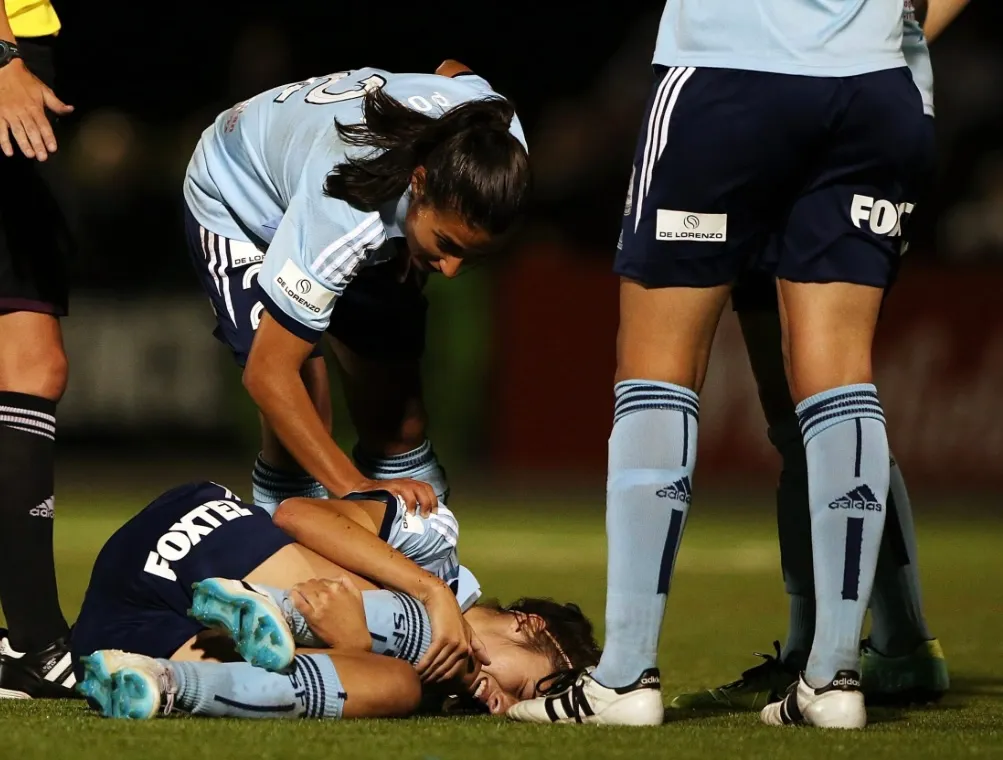

Over the past year I have been working with two athletes on their ACL rehabilitation and return to play (RTP) process. Their injuries occurred exactly a month apart during a spring season where the games do not count for anything more than just extra reps. So, obviously as a strength and conditioning professional the first thought after both injuries is “what did I do wrong?” and “what did I miss on preparing these two for the demands of sport?” Both thoughts are normal, at least I think so. All the S&C professionals I have talked to have said they have had the same thoughts. I truly think it’s a sign that you care about the athletes and their well-being, which you should in the profession.
This isn't my first encounter with the ACL rehab process. In a previous role at a D2 institution, where resources were limited, I worked with two athletes at the initial stages of their rehab. Not a ton of money was put into the S&C program, but we found ways to get things done and make things happen. Those of you who have been in those situations get it. It can be hard and challenging, but you get creative, and you find so many ways to make things work. These experiences, coupled with my current endeavors, have provided valuable lessons that have shaped my approach to rehabilitation. In sharing these insights, I hope to assist fellow strength and conditioning professionals navigating the complexities of the ACL rehab journey.
LESSONS LEARNED
1. NOT A ONE SIZE FITS ALL
Having two athletes with the same injury at the same time makes it easy to just have them complete the same rehab, or so I thought. The one month played a larger factor than I had expected. They each have things at which they are very proficient, and they also have in areas in which they lack. What we saw is once sport was beginning to be added, the athlete was still getting stronger and still becoming more powerful. They were just doing that with keeping the asymmetry. With the high level of testing we were able to do, I could see the results from the programming at a higher level. I could see who benefited more from each phase, which really showed me that maybe the traditional programming approach might now apply to everyone. (S/O Cal Dietz) When it comes to the beginning of the rehab process, I think the same workouts do fit. Having a base and guidelines are helpful here. Having markers set that must be met to progress are crucial. Some athletes will progress faster than others. Some will have a slow start but will progress faster at the end of the process and vice versa. At the end of the day, you need to be able to understand where each athlete is at and what they need. The ability to adapt is crucial through the rehab process and programming.
2. GET GOING ASAP
Immediate action is key in addressing post-injury challenges. Getting into workouts and getting the body as ready as possible for post-op is crucial. The muscle atrophy is going to hit hard and even harder if it is not addressed, and I believe this starts right away. Unaffected limb, anything tolerable on affected limb, cardio, and opposite to injured area (upper or lower). One thing I wish we had done right away, and after multiple talks with the sports science department, is to have the athlete isokinetic test immediately after injury, even if it is just unaffected side. This would have given us a solid baseline for when we are testing in return to play. As a team in our preseason, we will now do a whole set of baseline tests with isokinetic testing and motion capture with force plate data. Hopefully, it will never have to be used, but going into the future it will really set us up for success to prepare the athlete for the best possible return to sport.
3. EYE TEST ISN’T ENOUGH
Two of the most common return-to-play tests for an ACL rehab is the single leg hop and the single leg triple hop test. These two are used by PT’s, AT’s and RTP specialists all over the world. With our athletes here we are able to utilize a motion capture system that shows us a lot of information, especially things you can’t always see live. In our battery of RTP testing with the mocap, we implemented the two single leg hop tests. We wanted to see how the usual numbers used for passing, and the mocap data compared. What we found was that the test can definitely be passed from a number standpoint, but when you are able to see how force is distributed through each leg and each landing you can see some things that show they might not actually be ready. One thing we noticed was, yes, they are able to get out there, but how are they landing with the foot, how are the loading the knee on the land, what is the hip/torso angle of the landing, and last what is the percentage difference in all of these between the two legs?
4. FIND ASYMMETRIES AND ATTACK THEM
With all the testing we are able to do like force plate jumps, Nordic and ISO hamstring, isokinetic, and mocap, it really allows us to find deficiencies and asymmetries. Once these are found they should be monitored, and there should be a plan for them. Now, at the beginning of the rehab stage there will obviously be asymmetries, so they just need to be monitored and made sure that they are decreasing as the process goes on. When it is in the later stages, and you are still seeing them then that is when we attack them. What we saw is once sport was beginning to be added, the athlete was still getting stronger and still becoming more powerful although they were just doing that with keeping the asymmetry. In sport it’s so easy to hide your compensations. An important thing that was realized through this is that sometimes a few extra sets of just the asymmetrical limb are needed. This might be finishing with 3-4 sets of left leg quad extensions. With the extra work and monitoring, you are able to set the athlete up for success and hopefully working to rid them of the asymmetries that lead to compensation patterns, which can result in future injury.
5. TEAMWORK MAKES THE DREAM WORK
A huge part of the rehab process is going to be communication and collaboration by all staffs involved. It’s going to start with the athletic trainer and the strength and conditioning coach. Those two need to be talking every day. Establishing clear plans, milestones, and roles is essential. At some point the athlete will be frustrated and have questions and want some answers, it is important that the AT and S&C coach are on the same page, so there’s a united front. The next phase is bringing in the sports staff. This one can be harder. Obviously, their main goal is to get them back to playing, so they can help the team. The important thing is to make sure to go in and explain a clear plan and what you see for the athlete. Another thing Is to make sure you speak up when it isn’t being followed. At the end of the day, it’s that athlete’s health that is the most important. This leads to my next bullet point.
6. BEING THE BAD GUY IS BEING THE GOOD GUY
Through the emotional challenges of the rehab journey, the athlete is going to get frustrated or mad. There will be when you will to have to deliver news that the athlete doesn’t want to hear. Let’s be real here though, the only thing they want to hear is they are cleared. Many times, the athlete will create unrealistic expectations for themselves during this process. They think they are going to be the one athlete who gets cleared in record time. When it comes to that time they expected and they aren’t ready, you’re going to have to be the one to let them know they aren’t and why. The big thing, especially with athletes these days, is to have the numbers and evidence. They want to see the “why”. Your word, a lot of the time, isn’t good enough. Some of the most challenging and thoughtful questions I’ve been asked have come from rehab athletes. It’s almost like they are looking to beat you. It has been great for me, because it really challenged me to dive into the “what” of each test and data point we use. We need to understand it’s okay if this athlete is frustrated with us at times. At the end of the day, if they are back on the field and able to perform at a high level, that’s all that matters!
Now do I know everything about rehab? Absolutely not! The rehab process is a dynamic, individualized, constantly changing thing. As long as you have an established plan with set parameters and guidelines, a solid line of communication between all staff involved, and an understanding that it wont always be easy then you are on the right track to help that athlete return at a high level. Now I don’t have all the answers, but these are things that I wish I had known a little more about before I started. Hopefully they can set you up for success.